Dharavi Art District

About

Dharavi Art District in Mumbai is one of India’s most compelling examples of how community spaces can be transformed through creativity. Located within the heart of Dharavi, this open air art zone brings together local and international artists who collaborate to turn everyday walls into powerful storytelling canvases. The district blends raw urban charm with meaningful artistic expression, giving travellers a chance to witness the evolution of street art in India.

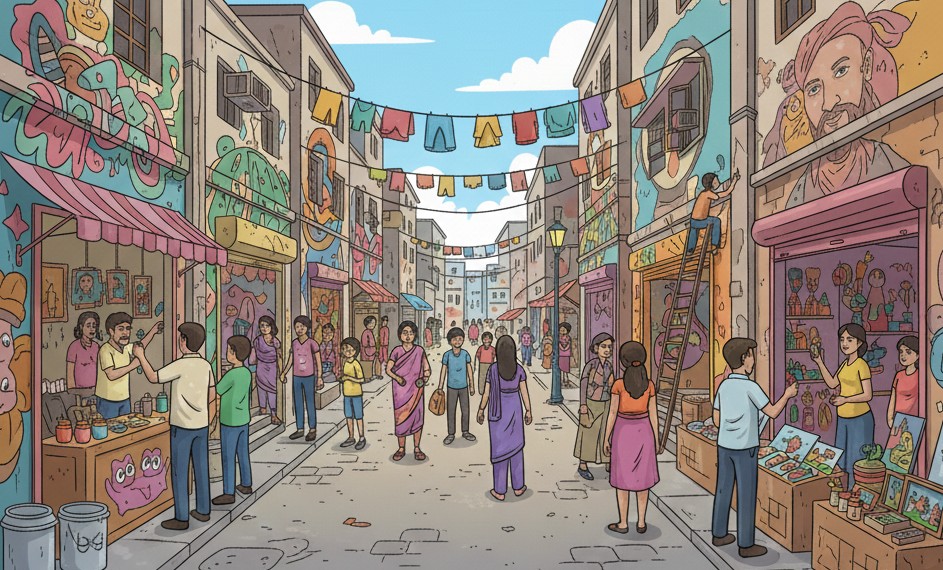
Walking through its narrow lanes, visitors encounter murals depicting social issues, cultural identity, human emotions and inspiring life journeys. Each artwork has a distinct personality, often influenced by the residents and local narratives. This blend of global techniques and local themes gives the district a unique visual voice.

The area is not only a sight for art lovers but also a cultural learning experience. Street art tours, community interactions and guided walks help travellers understand how art has empowered residents, encouraged youth participation and attracted global recognition. For photographers, the district is a paradise of vibrant colours, dramatic textures and striking contrasts.

Highlights of Dharavi Art District include:

  • Large scale murals created during the St+Art India Foundation projects

  • Artworks inspired by local stories, sustainability and social causes

  • Involvement of local youth and community groups in multiple pieces

  • Opportunities to interact with artists and artisans during guided tours

  • Constantly evolving walls, ensuring each visit offers something new

Dharavi Art District stands today as a symbol of transformation, showcasing how art can reshape perceptions, celebrate identity and bring communities together. For visitors exploring Mumbai’s cultural side, this district offers an unforgettable blend of street art, heritage and human connection.
History

The history of Dharavi Art District in Mumbai is closely linked to the rise of community focused street art in India. The transformation began when St+Art India Foundation initiated large scale public art projects in Dharavi, inviting Indian and international artists to collaborate with local residents.

Over the years, the district evolved from a cluster of regular neighbourhood walls into a vibrant open air gallery that reflects the stories, aspirations and culture of the community. These early art interventions reshaped perceptions about Dharavi and demonstrated how art can become a tool for social awareness, empowerment and identity building.

Key highlights of this evolution:

  • Initiated by St+Art India Foundation during early public art festivals
  • Featured works by renowned Indian and global street artists
  • Murals inspired by Dharavi’s residents, cultural themes and social narratives
  • Collaboration with local youth and community groups for art creation
  • Gradual recognition as one of India’s most impactful urban art zones


Facts & Figures

Dharavi Art District in Mumbai offers a mix of cultural depth, visual creativity and community driven initiatives. It is one of the few large scale public art zones in India where murals, graffiti and installations are created directly in collaboration with residents.

The district continues to evolve, with new artworks appearing every year and older pieces getting refreshed or replaced. These ongoing efforts make Dharavi a dynamic cultural landmark and a living museum of street art.

Key facts and figures:

  • Over 30 major murals created since the first St+Art India Foundation project
  • Multiple international artists have contributed to the artworks
  • Artworks spread across several lanes within Dharavi
  • Significant increase in footfall due to art walks and cultural tours
  • Popular photography and videography hotspot for travellers
  • Many pieces highlight social issues such as education, diversity and sustainability


Current Scenario

Dharavi Art District in Mumbai today stands as a thriving cultural hub that continues to attract travellers, photographers, students and art enthusiasts from across India and abroad. The walls are refreshed periodically, and new murals keep appearing as part of ongoing art collaborations.

Community participation remains strong, with local youth and residents often lending support during art projects and guided walks. The district has also become a preferred location for documentary makers, educational groups and urban researchers studying community based art. Visitor movement is steady throughout the year, especially on weekends when guided tours take place.

Current scenario highlights:

  • Regular addition of new murals and refreshing of older artworks
  • Increased popularity among tourists seeking cultural and offbeat experiences
  • Several guided tours conducted by local groups and art collectives
  • Strong involvement of local youth in storytelling and art initiatives
  • Popular spot for photography, videography and educational field trips
  • Growing recognition as one of India’s most vibrant urban art clusters
0313
Street Art - Styles & Themes

The street art found across Dharavi Art District in Mumbai reflects a wide mix of artistic styles and expressive themes. Many murals borrow elements from Indian folk art, contemporary illustration, bold graffiti lettering and social realism.

Artists often use bright colours, geometric patterns and emotional storytelling to capture the spirit of Dharavi. Popular themes include community resilience, daily life, identity, women empowerment, childhood, sustainability and the dreams of local residents.

Some murals are abstract and symbolic, while others portray detailed portraits inspired by people from the neighbourhood. This stylistic diversity makes the district visually rich and culturally meaningful for visitors.

Key artistic elements and themes:

  • Use of vibrant colour palettes and large scale wall compositions
  • Portrait based murals inspired by Dharavi residents
  • Graffiti styles with lettering, patterns and illustrated characters
  • Murals highlighting social issues like education, equality and environment
  • Art inspired by Indian folk motifs and contemporary street art fusion
  • Symbolic artworks representing hope, identity and community strength


Community Impact & Social Initiatives

The development of Dharavi Art District in Mumbai has created a powerful social impact on the community. Art projects have provided a platform for youth engagement, creative expression and confidence building.

Many murals are created in collaboration with residents, allowing their stories and voices to be represented visually. These efforts have helped change long held perceptions about Dharavi, promoting dignity, pride and cultural identity.

Community members often assist during painting, guided tours and storytelling sessions, strengthening local involvement. The art district has also attracted educators, filmmakers and global visitors who wish to understand community based development through creativity.

Major community driven initiatives:

  • Youth participation in guided workshops and mural creation
  • Story based murals representing local lives and aspirations
  • Training and support for young local artists
  • Involvement of residents in tours, storytelling and art events
  • Positive perception shift encouraging cultural tourism
  • Collaborative social projects bringing global and local artists together


Best Time to Visit

The best time to visit Dharavi Art District in Mumbai is during the cooler and drier months when walking through the lanes becomes more comfortable. The murals look vibrant in natural daylight, making mornings and late afternoons ideal for photography and guided tours.

While the district is open throughout the year, the monsoon season is less suitable because narrow lanes can become slippery and outdoor art walks may be disrupted by rain. Visiting during festivals or art events can also enhance the experience, as new murals are often unveiled during those periods.

Best time highlights:

  • November to February offers pleasant weather for walking
  • Early mornings and late afternoons are ideal for photography
  • Avoid monsoon months due to wet lanes and reduced mobility
  • Art events and street art festivals add extra vibrancy
  • Weekends have more guided tour options but can be slightly crowded
  • Weekdays offer quieter exploration for photographers
0613
Timings, Entry Fees & Rules

Dharavi Art District in Mumbai does not function like a conventional tourist monument, so there are no formal entry timings or fixed ticket charges. The lanes remain accessible throughout the day, allowing visitors to explore the murals at their own pace.

However, most guided tours take place during daylight hours to ensure safety and better visibility of the artworks. Since this is a residential neighbourhood, visitors are expected to follow basic etiquette to respect the privacy and daily routines of the residents. Photography is generally allowed, but visitors should avoid taking close up photos of people without permission.

Timings, fees and rules:

  • Open access area with no fixed opening or closing timings
  • No entry fee for exploring the murals
  • Guided tours operate mostly between 9 AM and 6 PM
  • Photography allowed, but be mindful of residents
  • Avoid blocking lanes or disturbing local activities
  • Recommended to visit during daylight for safety and visibility
  • Always stay with tour groups if you prefer structured exploration
  • Respectful behaviour is essential in residential zones


Disclaimer: Timings and guided tour charges may change; visitors should check details with the tour operator or organiser beforehand


How to Reach

Reaching Dharavi Art District in Mumbai is convenient due to its central location and strong connectivity through road, metro, train and air routes. Travellers can access the district from various parts of the city using public transport or private vehicles. Since the murals are spread across different lanes within Dharavi, most guided tours begin near prominent landmarks that are easy to locate. Visitors are advised to follow the tour organiser’s meeting point for a smooth start.

How to Reach:

  • By Air: The nearest airport is Chhatrapati Shivaji Maharaj International Airport, located about 7 to 9 km away. Taxis or autos can be taken via the Western Express Highway, with travel time of 20 to 35 minutes depending on traffic.

  • By Train: The closest stations are Mahim Junction and Sion Station, both around 1 to 1.5 km away. Visitors can walk or take an auto towards Dharavi’s main lanes where tours begin.

  • By Road / Metro: Dharavi is accessible via the Sion-Bandra Link Road and LBS Road. The nearest metro stop is Dharavi Metro Station on Line 2A/2B. Landmarks like T Junction, 90 Feet Road and Kumbharwada are common meeting points. Autos and buses run frequently.


Tips & Hacks

Visiting Dharavi Art District in Mumbai can be a rewarding experience if travellers follow some smart tips for comfort, safety and better exploration. Since the murals are spread across narrow residential lanes, it is important to respect the community’s space while exploring.

Guided tours are highly recommended for first time visitors as they provide context, navigation support and cultural insights. Comfortable walking shoes, hydration and minimal baggage make the tour smoother. Photography is allowed, but visitors should always ask before capturing residents.

Useful tips and hacks:

  • Wear comfortable footwear suitable for walking in narrow lanes
  • Morning and late afternoon slots offer the best lighting for photography
  • Avoid visiting during heavy rains as some lanes may get slippery
  • Stay with your tour guide to prevent missing key murals
  • Carry only essential items to keep your hands free
  • Be polite when photographing people or private spaces
  • Weekdays are less crowded, ideal for photographers
  • Follow local etiquette and avoid loud conversations
  • Keep emergency cash for autos or local transport
0913
Recommendations for Tourists

Dharavi Art District in Mumbai offers a unique blend of creativity, community stories and immersive street experiences, making it suitable for all types of travellers.

Local tourists can explore the district as part of a half day cultural itinerary, combining it with nearby attractions in Mahim, Sion or Bandra.

International tourists will appreciate guided tours that provide deeper context about the community, art collaborations and the evolution of Dharavi’s creative scene.

Both groups can enjoy photography sessions, storytelling walks and opportunities to interact with local artists. A structured approach ensures a richer understanding of the murals and their significance.

Recommendations for tourists:

  • Local tourists can plan a 2 to 3 hour walking tour
  • Combine the visit with nearby attractions like Mahim Dargah or Bandra Fort
  • International visitors should opt for guided tours for cultural insights
  • Bring a good camera or phone for vibrant mural photography
  • Wear light clothing and comfortable shoes
  • Include a stop at local craft clusters for a holistic experience
  • Ideal for solo travellers, families, students and art lovers
  • Keep some extra time for unexpected discoveries along the lanes


Food Courts / Food Options Nearby

Food options around Dharavi Art District in Mumbai range from local eateries to budget friendly snacks and mid range dining choices. Visitors can explore authentic neighbourhood flavours as well as popular spots in nearby areas like Mahim and Bandra.

The region is known for its street food, bakeries and small cafés that offer affordable and tasty meals. Whether you’re looking for a quick bite during the art walk or a proper meal after the tour, there are plenty of options for every budget.

Nearby food options:

  • Local Dharavi eateries serving pav bhaji, biryani, samosas and chai (₹50 to ₹150 per person)
  • Street food stalls near T Junction offering vada pav, bhurji pav and kebabs (₹40 to ₹120 per person)
  • Small cafés around Mahim serving sandwiches, rolls, coffee and pastries (₹150 to ₹300 per person)
  • Popular restaurants in Bandra offering North Indian, Chinese and fusion food (₹300 to ₹700 per person)
  • Mahim’s famous bakeries offering buns, kheema pav and sweet items (₹50 to ₹200 per person)

Must try items:

  • Kheema pav at Mahim
  • Vada pav from local stalls near Dharavi
  • Bun maska and tea from Irani cafés in Mahim
  • Grilled sandwiches in Bandra
  • Snacks like samosas and bhajiyas inside Dharavi lanes


Food Courts / Food Options Nearby

Food options around Dharavi Art District in Mumbai range from local eateries to budget friendly snacks and mid range dining choices. Visitors can explore authentic neighbourhood flavours as well as popular spots in nearby areas like Mahim and Bandra.

The region is known for its street food, bakeries and small cafés that offer affordable and tasty meals. Whether you’re looking for a quick bite during the art walk or a proper meal after the tour, there are plenty of options for every budget.

Nearby food options:

  • Local Dharavi eateries serving pav bhaji, biryani, samosas and chai (₹50 to ₹150 per person)
  • Street food stalls near T Junction offering vada pav, bhurji pav and kebabs (₹40 to ₹120 per person)
  • Small cafés around Mahim serving sandwiches, rolls, coffee and pastries (₹150 to ₹300 per person)
  • Popular restaurants in Bandra offering North Indian, Chinese and fusion food (₹300 to ₹700 per person)
  • Mahim’s famous bakeries offering buns, kheema pav and sweet items (₹50 to ₹200 per person)

Must try items:

  • Kheema pav at Mahim
  • Vada pav from local stalls near Dharavi
  • Bun maska and tea from Irani cafés in Mahim
  • Grilled sandwiches in Bandra
  • Snacks like samosas and bhajiyas inside Dharavi lanes
01213
Additional Notes / Fun Facts

Dharavi Art District in Mumbai is full of interesting stories and creative details that make it a memorable place to explore. Many murals are painted in collaboration with local children, giving them a platform to express their dreams and identities. Some artworks change every few years, as walls are repainted during new art festivals or community projects.

Several international artists have travelled specifically to Dharavi to work with local residents and co create murals inspired by daily life. The art district has appeared in documentaries, photography exhibitions and global travel features, increasing its visibility as a symbol of community empowerment through creativity.

Fun facts:

  • Some murals took over a week to complete due to scale and detail
  • Several artworks incorporate real stories shared by residents
  • A few murals were created with eco friendly paints
  • The district is a popular location for student photography assignments
  • Many visitors are surprised to learn that Dharavi has a thriving artistic community
  • The art district continues to evolve with each new project
1301


Places Nearby Dharavi Art District
Frequently Asked Questions
Q1: What is the entry fee for visiting the Dharavi Art District in Mumbai?
A1: There is no entry fee to explore the Dharavi Art District in Mumbai, as it is an open access public art area.
Q2: What are the best timings to visit the Dharavi Art District?
A2: The best time to visit the Dharavi Art District is during daylight hours, especially in the morning or late afternoon when the murals look vibrant.
Q3: Is photography allowed at the Dharavi Art District in Mumbai?
A3: Yes, photography is allowed at the Dharavi Art District, but visitors should avoid capturing residents without permission.
Q4: How much time is needed to explore the Dharavi Art District?
A4: A visit to the Dharavi Art District typically takes about 2 to 3 hours, depending on pace and interest.
Q5: Is the Dharavi Art District safe for tourists?
A5: Yes, the Dharavi Art District is generally safe for tourists, especially during guided tours and daylight hours.
Q6: How do I reach the Dharavi Art District using public transport?
A6: You can reach the Dharavi Art District via Mahim Junction, Sion Station, or the Dharavi Metro Station, followed by a short walk or auto ride.
Q7: Are guided tours available at the Dharavi Art District?
A7: Yes, guided tours are available at the Dharavi Art District, offering deeper insights into the murals and community stories.
Q8: What is special about the murals in the Dharavi Art District?
A8: The murals in the Dharavi Art District are special because they blend local stories, social themes and global street art techniques.
Q9: Is the Dharavi Art District suitable for children and families?
A9: Yes, the Dharavi Art District is family friendly, and children often enjoy the colourful murals and storytelling elements.
Q10: Can international tourists visit the Dharavi Art District safely?
A10: Yes, international tourists can safely visit the Dharavi Art District, especially with organised tours that provide cultural context.
Q11: What should I wear while visiting the Dharavi Art District?
A11: Visitors to the Dharavi Art District should wear comfortable footwear and light clothing suitable for walking through narrow lanes.
Q12: Is it possible to interact with local artists in the Dharavi Art District?
A12: Yes, many guided tours in the Dharavi Art District offer opportunities to meet local artists and learn about their creative process.
Q13: Are there any food options near the Dharavi Art District?
A13: Yes, areas around the Dharavi Art District offer local eateries, street food stalls and cafés in Mahim and Bandra.
Q14: What makes the Dharavi Art District unique compared to other art districts in India?
A14: The Dharavi Art District is unique because it combines community driven murals with stories of real residents, making it a living social art space in Mumbai.
Q15: Is the monsoon a good time to visit the Dharavi Art District?
A15: The monsoon is not ideal for visiting the Dharavi Art District as the lanes may become slippery and outdoor art walks can be disrupted by rain.